
Sterilization is not just a final processing step; it is a core design and regulatory decision that can determine how smoothly your device progresses through regulatory approvals. In this blog, we look at the main sterilization methods and how to align your choice with expectations under various medical device regulations.
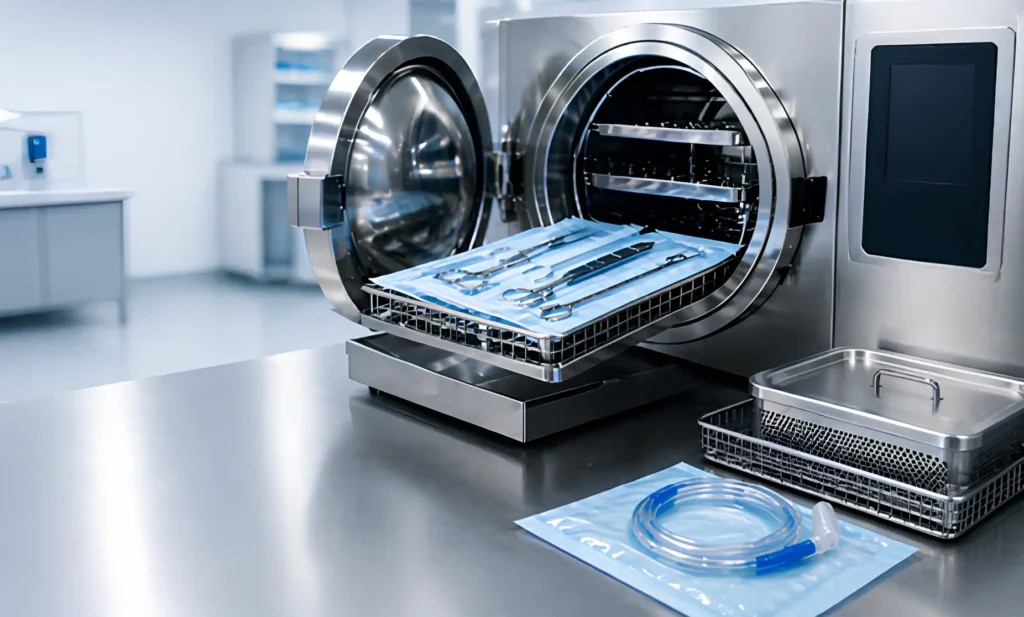
The main sterilization methods you should know
There is a set of established methods for medical devices.
- Ethylene oxide (EtO) gas sterilization – ISO 11135.
- Radiation sterilization (gamma, ebeam, Xray) – ISO 11137.
- Moist heat / steam sterilization – ISO 17665.
- Dry heat sterilization.
- Vaporized hydrogen peroxide (VHP) and other low temperature chemical methods – guided by ISO 14937 and, for VHP, ISO 22441.
ISO 14937 acts as an umbrella, defining general requirements for characterizing sterilizing agents and validating processes, particularly for methods without their own detailed ISO process standard.
How regulators see sterilization
Under EU MDR 2017/745, manufacturers must demonstrate that sterile devices meet stateoftheart requirements, typically by applying harmonized EN ISO standards such as EN ISO 11135, EN ISO 11137 and EN ISO 17665. The European Commission’s lists of harmonized standards and guidance from Notified Bodies are central when defending your sterilization strategy in the technical documentation and during audits.
US FDA treats moist heat, dry heat, EtO and radiation as “Established Category A” sterilization methods and has recently elevated VHP as an additional established modality, reflecting its push to reduce EtO emissions while preserving patient safety. FDA’s recognized consensus standards program formally lists ISO 11135, ISO 11137 and ISO 17665, so aligning your validation with these standards directly supports 510(k), PMA or De Novo submissions.
India’s Medical Device Rules (MDR) 2017, enforced by CDSCO, align closely with ISO 13485 and international practice and expect validated sterilization processes integrated into the manufacturer’s QMS. While the rules do not prescribe individual ISO sterilization standards, in practice Notified Bodies and regulators in India look for the same families of standards (ISO 11135, 11137, 17665, 14937) when assessing technical files, plant audits and GMP under Schedule V.
Methods and selection factors (materials, complexity, packaging, regulation)
Below is a ready-to-use table that helps to decide which method to follow
| Method | When it fits materials | When it fits device design | Packaging fit | Regulatory/Standard cues |
| Ethylene oxide (EtO) | Best for mixed materials, polymers, electronics and heat/moisturesensitive components where EtO compatibility and residuals can be controlled. | Handles complex, longlumen, multicomponent sets and finished, assembled devices very well because gas penetrates difficult geometries given proper cycle design. | Needs porous, EtOcompatible packaging (e.g., Tyvek–film pouches, breathable trays) to allow gas in and out and to support aeration. | EU: EN ISO 11135 is harmonized under MDR and widely expected by Notified Bodies. US: EtO is Category A; FDA has specific EtO guidances and town halls, and urges consideration of alternatives where feasible. India: Accepted as a primary industrial method where validated per ISO 11135 within an ISO 13485compliant QMS. |
| Radiation (gamma, ebeam, Xray) | Well suited to many singleuse polymer devices, tubings, syringes and kits, provided doserelated polymer degradation and label stability are controlled. | Good for moderate complexity products and prepackaged loads; dense or highly variable loads require careful dose mapping but do not face gas penetration constraints. | Requires radiationstable packaging (many films and Tyvek structures qualify) and attention to dose effects on barrier and print quality. | EU: EN ISO 11137 is a central harmonized standard; auditors expect dosesetting and doseaudit aligned with the standard. US: Category A method; FDA recognized standards and guidance emphasize robust dose setting (e.g., VDmax, Method 1) and ongoing monitoring. India: Common for disposables; regulators look for ISO 11137based validation reports in technical documentation and NB audits. |
| Moist heat / steam | Ideal for heat and moisturestable metals and robust polymers such as many reusable surgical instruments and some singleuse devices. | Works well for devices with accessible surfaces and simple to moderate internal channels; cycles must ensure air removal and steam penetration in containers and sets. | Uses porous wraps, rigid containers and pouches designed for steam penetration and drying, with validated barrier performance. | EU: EN ISO 17665 appears on MDR harmonized lists; EN 285 and related standards govern large steam sterilizers. US: Category A method with long history; FDA recognizes ISO 17665 and expects clear load configuration and monitoring strategy. India: Standard of care in hospitals and many manufacturers; alignment to ISO 17665 within MDR 2017 QMS documentation is increasingly expected. |
| Dry heat | Suitable for hightemperaturetolerant materials such as certain glassware, metal instruments and moisturesensitive powders or oils. | Typically limited to simple, solid devices and components where uniform, sustained high temperatures can be delivered. | Packaging must withstand high temperatures and maintain sterility; often simpler wraps or containers compared with steam. | EU/US/India: Recognized as an established method, usually justified using ISO 14937 plus equipmentspecific standards, with full validation and routine control evidence. |
| Vaporized hydrogen peroxide (VHP) | Attractive for many heatsensitive materials and electronics that tolerate hydrogen peroxide and associated humidity. | Better for smaller or less densely packed loads and devices without very long, narrow lumens; penetration is more limited than EtO or radiation. | Requires lowabsorbing packaging that does not scavenge peroxide excessively; often used with specific systems and packaging designs. | EU: Can be justified under ISO 14937 and, increasingly, ISO 22441, but Notified Bodies may examine rationale and validation data closely. US: Recently added as an Established Category A method; FDA encourages VHP where it can safely replace EtO. India: Emerging but less common; CDSCO and NBs expect strong ISO 14937based justification and clear risk analysis when using newer modalities. |
| Other lowtemperature chemical methods (e.g., chlorine dioxide, nitrogen dioxide, vaporized peracetic acid) | Useful for selected polymer and electronic devices when supported by targeted material compatibility and residue data. | Often chosen when low temperature is essential and device geometry allows adequate gas/vapor contact, but the method may be device or plantspecific. | Packaging and load design are highly systemspecific and must be part of validation, including worstcase arrangements | EU/US/India: Generally treated as “nontraditional” methods; regulators expect ISO 14937style characterization, robust validation, and clear labeling/IFU processing information as per ISO 176641. |